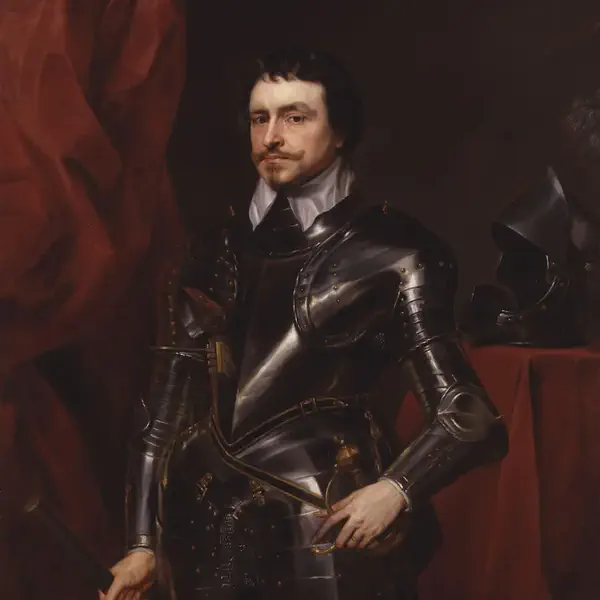
Birth of Thomas Wentworth, Earl of Strafford-Viceroy of Ireland
Thomas Wentworth, 1st Earl of Strafford, KG (13 April 1593 (N.S.) – 12 May 1641), was an English statesman and a major figure in the period leading up to the English Civil War. He served in Parliament and was a supporter of King Charles I. From 1632 to 1640 he was Lord Deputy of Ireland, where he established a strong authoritarian rule. Recalled to England, he became a leading advisor to the King, attempting to strengthen the royal position against Parliament. When Parliament condemned Lord Strafford to death, Charles reluctantly signed the death warrant and Strafford was executed.
ireland
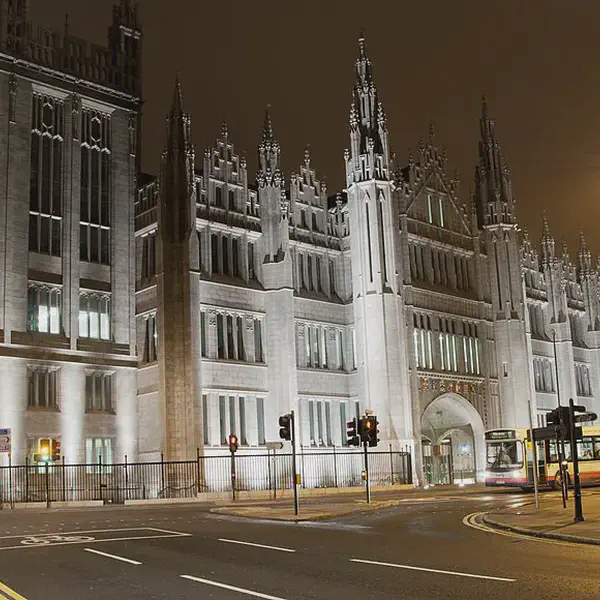
Marischal College, second University in Aberdeen, founded.
Marischal College is a large granite building on Broad Street in the centre of Aberdeen in north-east Scotland, and since 2011 has acted as the headquarters of Aberdeen City Council. However, the building was constructed for and is on long-term lease from the University of Aberdeen, which still uses parts of the building to store its museum collections.
ireland
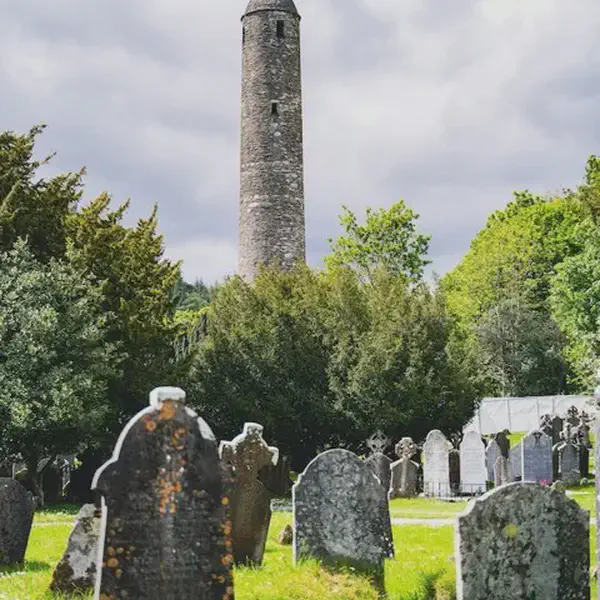
Red Hugh O'Donnell, son of the Earl of Tyrconnell makes a dramatic escape from the Record Tower
On January 6, 1592, Red Hugh O’Donnell, son of the Earl of Tyrconnell, made a dramatic escape from the Record Tower of Dublin Castle, where he had been held prisoner by the English since 1587. - O’Donnell had been kidnapped as a teenager in a calculated move by the English authorities to weaken the powerful Gaelic lords of Ulster. - His imprisonment was designed to undermine the O’Donnell clan and ensure the loyalty of his father to the English Crown. - After nearly five years in captivity, he managed to escape during a snowstorm with the help of allies, including Hugh Roe MacMahon and Art O’Neill (who died from exposure during the escape). - Red Hugh, though severely frostbitten and having lost several toes, made his way back to Donegal, where he was hailed as a hero and soon took up leadership of the clan.
ireland
An Act of the Scottish Parliament formally regulating heralds.
An Act of the Scottish Parliament comes into force, formally regulating the office of the Lyon King of Arms and his subordinate officers, known as heralds. This legislation establishes what would become the most systematically organized and rigorously enforced system of armorial bearings in Europe. The Court of the Lord Lyon, responsible for ov
ireland
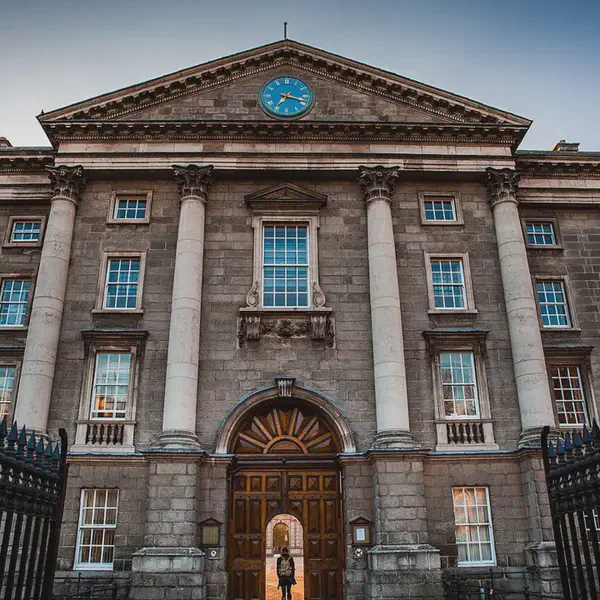
A charter incorporates the College of the Holy and Undivided Trinity, near Dublin
The College of the Holy and Undivided Trinity, near Dublin, more commonly known as Trinity College Dublin (TCD), was incorporated by royal charter under Queen Elizabeth I on March 3, 1592. The charter aimed to establish a university in Dublin to provide education and training for members of the Protestant clergy, as well as to serve as a center for learning in the arts and sciences for the wider community. Trinity College was modeled after the collegiate universities of Oxford and Cambridge, with an organizational structure that included a Provost, Fellows, and Scholars.
ireland
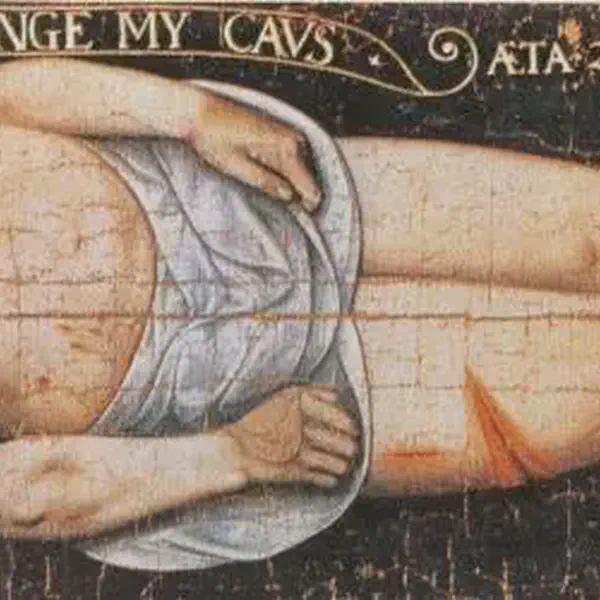
Earl of Moray murdered at Donibristle
On February 7, 1592. James Stewart, the 2nd Earl of Moray, was indeed murdered at Donibristle near Dalgety Bay in Fife, Scotland.
ireland
The Spanish Armada is defeated by the English
The defeat of the Spanish Armada in 1588 by the English navy is one of the most famous events in European history. The Armada’s mission was to invade England and overthrow Queen Elizabeth I, but it ended in disaster for Spain. After their defeat, many ships from the Armada were wrecked on the coasts of Ireland as they attempted to return to Spain by sailing around the British Isles. Some of the Spanish sailors who reached the Irish coast were killed, while others survived and were integrated into Irish communities.
ireland
Battle of Ardnaree, Sir Richard Bingham surprises a force of redshanks
At the Battle of Ardnaree (1586) in County Mayo, Sir Richard Bingham, the English governor of Connacht, surprised and attacked a force of Scottish mercenaries (known as redshanks) who had been hired by the Burke clan. In the assault, approximately 1,000 redshanks and an equal number of non-combatant camp followers were killed. Following the battle, Bingham ordered the surviving leaders of the Burke faction to be hanged, further consolidating English authority in the west of Ireland.
ireland